


 Ben Whitmore
 Michael Mardahl
Cloud Kerberos Trust for Windows Hello for Business is the apex of single sign-on solutions for your Windows devices. in this Trilogy you can expect to learn the what, the how and the wow!
Looking for other parts?
Part 1 – Part 2
The story so far
We continue our mini series on Windows Hello for Business Cloud Kerberos Trust. In part 2 we walked through the configuration of Cloud Kerberos Trust for both on-premise infrastructure and clients.
If you missed part 1 of our series, your journey into “Cloud Kerberos Trust” should start here: Simplify Windows Hello for Business SSO with Cloud Kerberos Trust – Part 1
We love the elegance and simplicity of Cloud Kerberos Trust but in this final post of the mini series we will dive a little deeper and look at some of the mechanics and moving parts to help you understand and troubleshoot your way out of a hole- if you need to.
Hold tight and get your engineer brain engaged as we equip you with the tools you need to succeed!
Pick-up your engineering toolkit and come down the rabbit hole
Migrating from other Trust Models
This question often comes up, naturally. What if you are using hybrid key trust and you want to begin kicking the tires on cloud kerberos trust? The answer is simpler than you might think.
Migrating from a hybrid key trust model is very simple. For Azure AD and Hybrid Azure AD joined devices, simply deploy the Intune configuration to enable cloud kerberos trust and the user will switch to cloud kerberos trust. The extra requirement for Hybrid Azure AD joined devices is the device requires line-of-sight to a DC at first logon or it will fall back to using key trust.
Migrating from certificate trust has more moving parts. You must disable the existing certificate trust policy, deploy the Intune configuration to enable cloud kerberos trust, delete the existing hello credential and sign back in to the device.
Use the following command to delete the existing hello credential
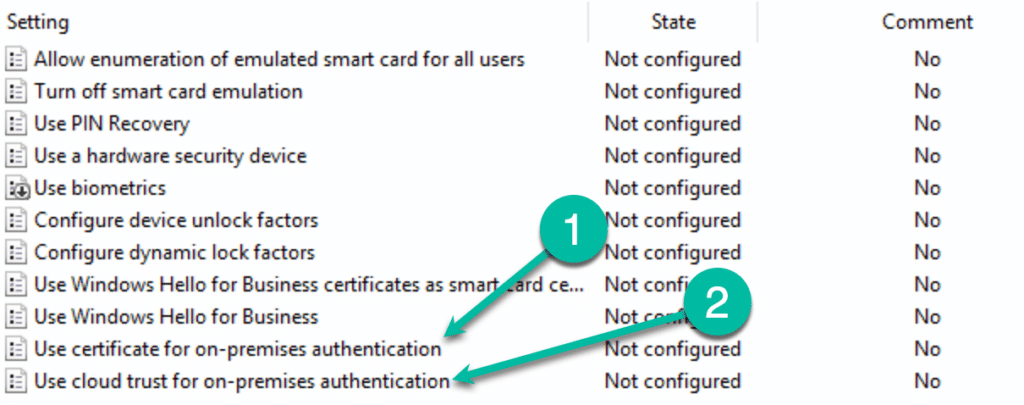
certutil.exe -DeleteHelloContainerThe “Key” thing to understand, (see what I did there?) is that a policy that defines neither: “Use certificate for on-premises authentication (*1)” or “Use cloud trust for on-premises authentication (*2)” is considered as using the “Key Trust” model for authentication.
Privileged Accounts
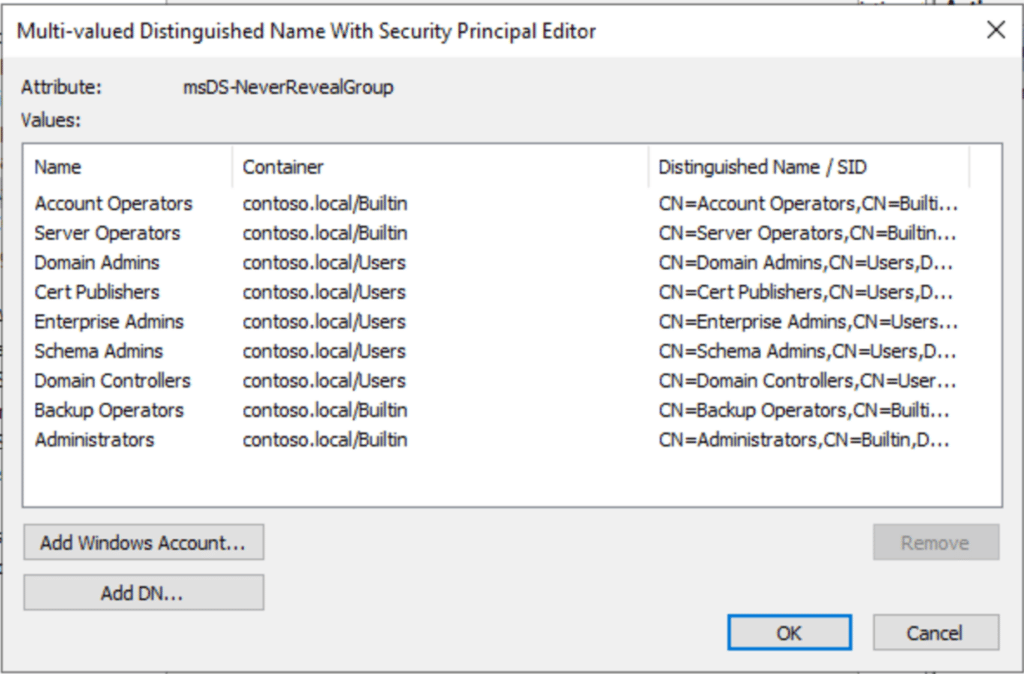
Highly privileged accounts are not granted, by default, to use FIDO2 security keys and/or cloud kerberos trust to login to a device. The local security policy forbids it.
The msDS-NeverRevealGroup property is used to define which AD objects forbidden to have their passwords cached on the Kerberos RODC.
To unblock the accounts, use Active Directory Users and Computers to modify the msDS-NeverRevealGroup property of the Azure AD Kerberos Computer object (CN=AzureADKerberos,OU=Domain Controllers,<domain-DN>).
Caution should be used when relaxing any local security policy. Understand the impact, if any, of what you are about to do
Next Generation Credential (NGC)
The Next Generation Credential (NGC) is important. Verify the NGC has been set on client devices correctly by using dsregcmd (in the user context) command. NgcSet: YES means that a hello key has been set for the current user
dsregcmd /status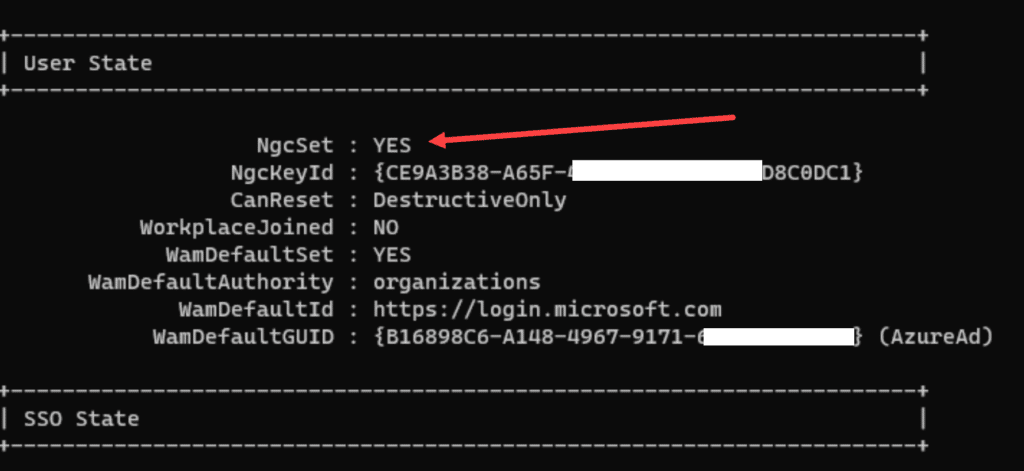
Verify the NGC has been saved to the user object in AzureAD using Graph Explorer. Examine the deviceKeys attribute for the NGC assigned to the device the user logged on to using WHfB.
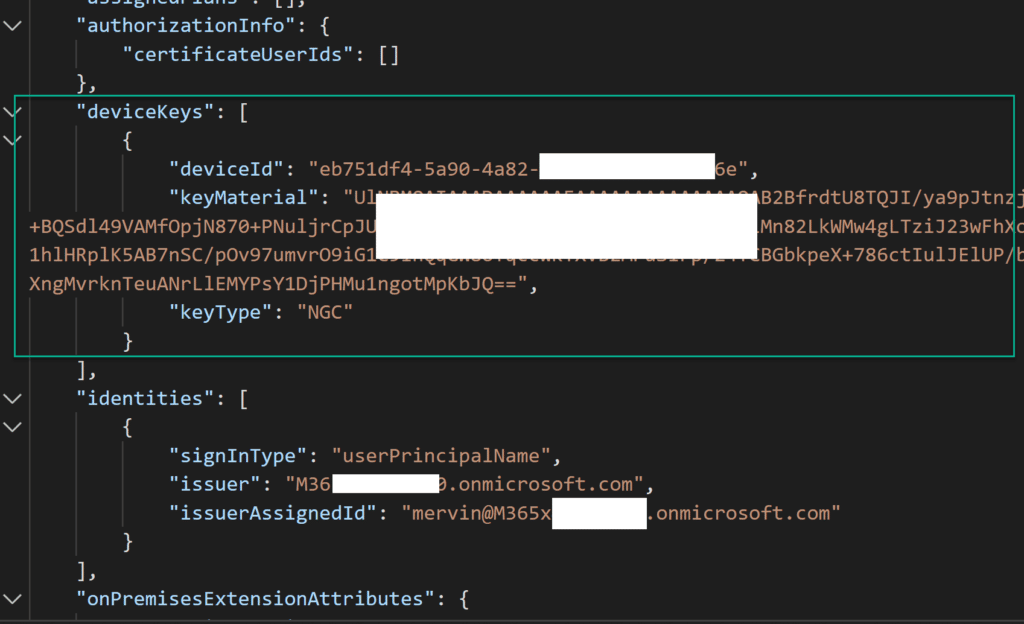
The NGC is present as a result of the normal WHfB authentication process – it is not specific to us enabling AzureAD Kerberos but it will be important when we look at other moving parts later in this blog.
The NGC contains the base64-encoded public portion of the asymmetric key pair used for WHfB authentication.
You can also see in the Windows event log that the NGC was created and written to the user object in Azure AD
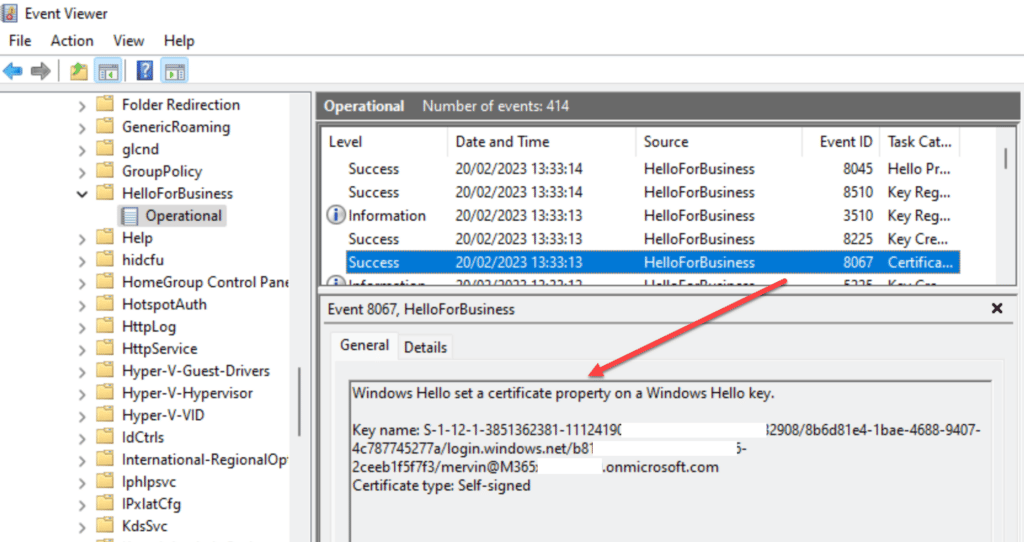
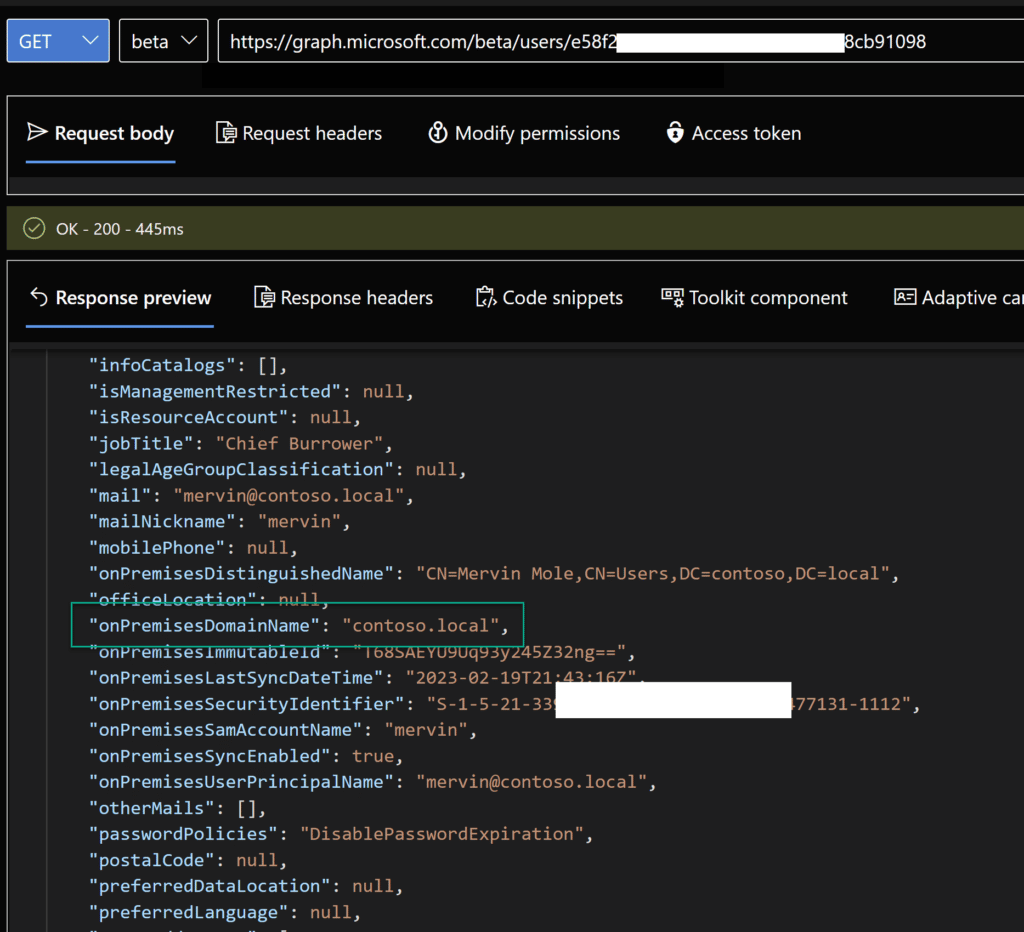
In Graph Explorer, we can also see some other cool metadata that will be useful when we deep dive later!
Cloud Kerberos Trust under the Microscope
Before we dial in our microscopes it is best we define what the high level components are in a Windows Hello for Business Cloud Kerberos Trust relationship as this will help us sort through the finer details.
- AzureADKerberos
- Windows 10/11
- Windows Server 2016 or newer DC
- User account synced from On-Premise
Yes, it is basically just those few things, no PKI is explicitly required! And now we have that sorted, on to nitty gritty.
AzureADKerberos
In Part 2, we provisioned the Azure AD Kerberos Read-Only Domain Controller (RODC) object into the “Domain Controllers” OU of our local Active Directory domain.
So what happens when the object is created? It creates a server object that can issue Ticket Granting Tickets (TGTs) for Kerberos in your domain. The encryption key is then securely published to Azure AD, which allows it to issue a partial TGT as part of the magic behind Cloud Kerberos Trust. This partial TGT is received by the user via the Primary Refresh Token when they authenticate with Azure AD. The TGT includes only the user’s SID, and no authorization data.
This is a one-time operation, and for each on-premises domain, an object will represent it in Azure AD. No background processes are enabled to keep things in sync. It’s all very secure!
If you have more than one on-premises domain, each one will have a key in Azure AD that corresponds to the on-premises domain. Thus, if you have multiple domains, this is not an issue. However, if you have a single domain and multiple tenants, the issue becomes more complicated, as there is no option to just publish the encryption key of the current Azure AD Kerberos RODC object into another tenant.
It’s important to know that, since the encryption key (kbrtgt) is not synced after the initial publishing into Azure AD, it’s imperative to only use the Azure AD Kerberos PowerShell module to rotate the kbrtgt of the Azure AD Kerberos RODC object.
Set-AzureADKerberosServer -Domain $domain -UserPrincipalName $userprincipalname -RotateServerKeyThere is more of on the official Microsoft Learn site: Passwordless security key sign-in to on-premises resources – Azure Active Directory – Microsoft Entra | Microsoft Learn
Windows 10/11
ICYMI: Windows is required for Windows Hello for Business to function. But not just any version of Windows. Windows 10 21H2 and later are recommended because the Cloud Kerberos Trust feature was introduced with this build.
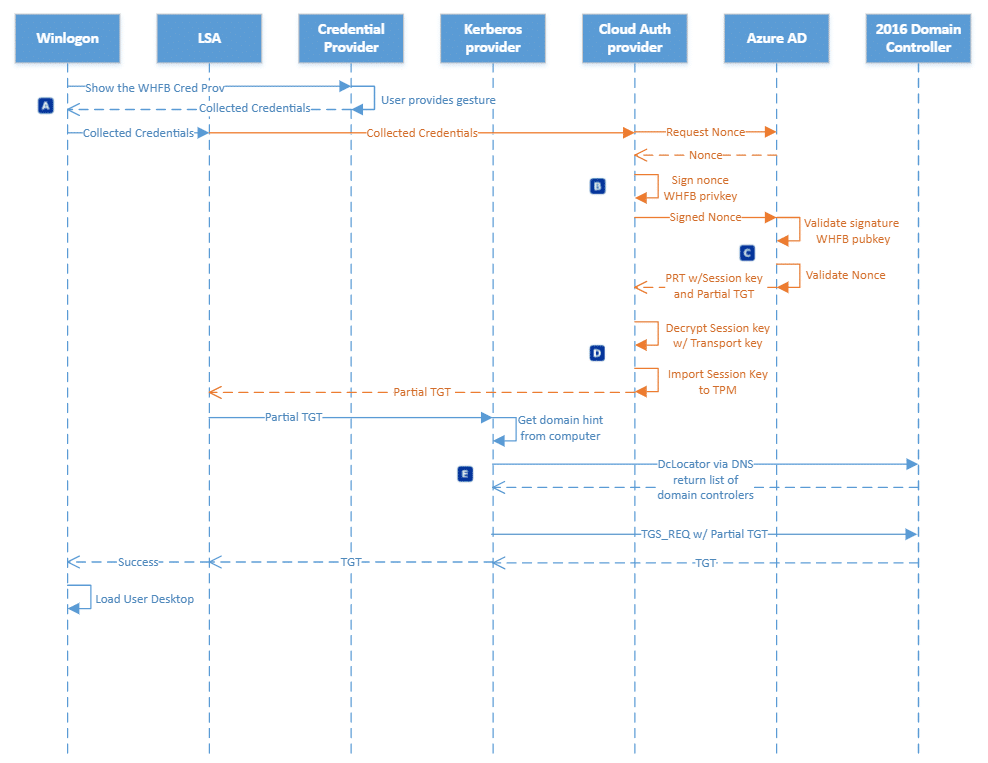
So what happens during sign-in, since it is important to have an updated version of Windows? Well it depends on what join-type your device is using – Hybrid Join or Azure AD Join. Let’s start with the most common “Hybrid Join”.
Hybrid Joined
There are many roads to Rome, and this one takes the longest of them all!
Azure AD Joined
Be prepared to be amazed at the simplicity of being in an Azure AD Joined state and doing SSO to your on-prem resources:
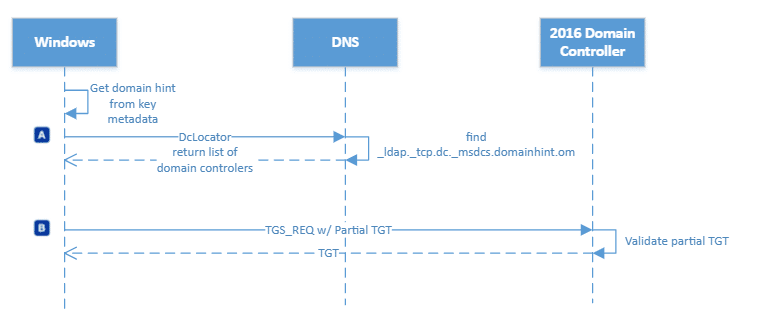
If you wanna get deeper into it and follow these awesome diagram flows from Microsoft, there is the official documentation at Microsoft Learn: How Windows Hello for Business works – Authentication | Microsoft Learn
Windows Server 2016 or newer DC
Now what’s wrong with the classic Server OS of yesteryear? It’s kerberos trust! Surely it matters not what version ones domain controller is at?
Well that part right and some parts wrong. See, there must be one or more Windows server 2016 DC’s to support both the Key Trust and the Cloud Kerberos Trust models, as they need to be able to interpret the Cloud TGT.
The amount of DC’s is determined by the amount of overhead the additional Kerberos requests cause in your domain. So even if you choose to upgrade all your current DC’s that might not be enough if you decide everyone has to use WHfB. As Windows Hello for Business generates a sign-in process overhead, and you might need to plop in a few more “Mega Godzilla Beast servers” (as Mark Russinovich likes to call his pet servers) to take the load.
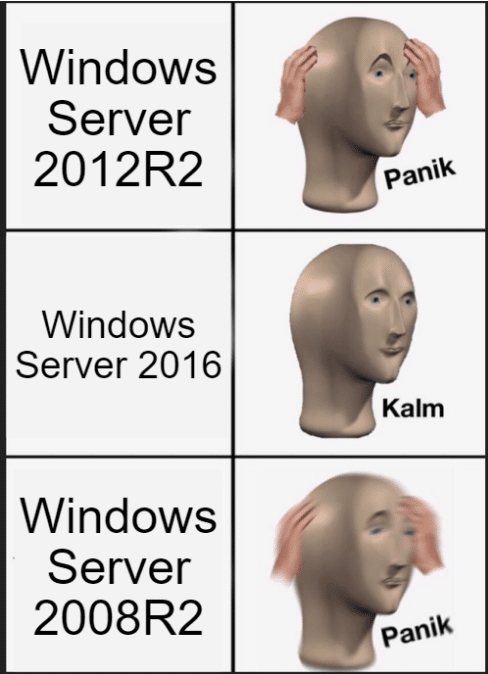
So, we are talking about Windows Server 2016+ Domain Controllers, which just upgrades the Schema when introduced. But what about the forrest and domain functional level you ask?
Well… Windows Server 2008 R2 Domain/Forest functional level is the accepted minimum. If you like leftovers and dumpster diving, you can go right ahead and keep it like that.
User account synced from On-Premise
We have already eluded to the fact that an on-premise user account is indeed needed – so there is no crying to mommy when your pure cloud user won’t magically SSO into the ocean of legacy file shares you might have on-premise.
The simple fact is that the TGT that you get from Cloud Kerberos, is in fact just an identifier, proving that you are in fact a synced user from the on-prem domain. and the full TGT which you get from the DC, contains information that comes from the on-prem. Azure AD has no clue about what resources are in your on-prem, and even if it did, the on-prem is likely not trusting Azures own Kerberos tokens (yes, there is another thing called Azure AD Kerberos, which can issue full TGT’s for resources like file shares in an Azure Storage account, but I digress).
To get deeper into how all this works, we need to spinup a new headline called (drum-roll please)…
Kerberos is King!

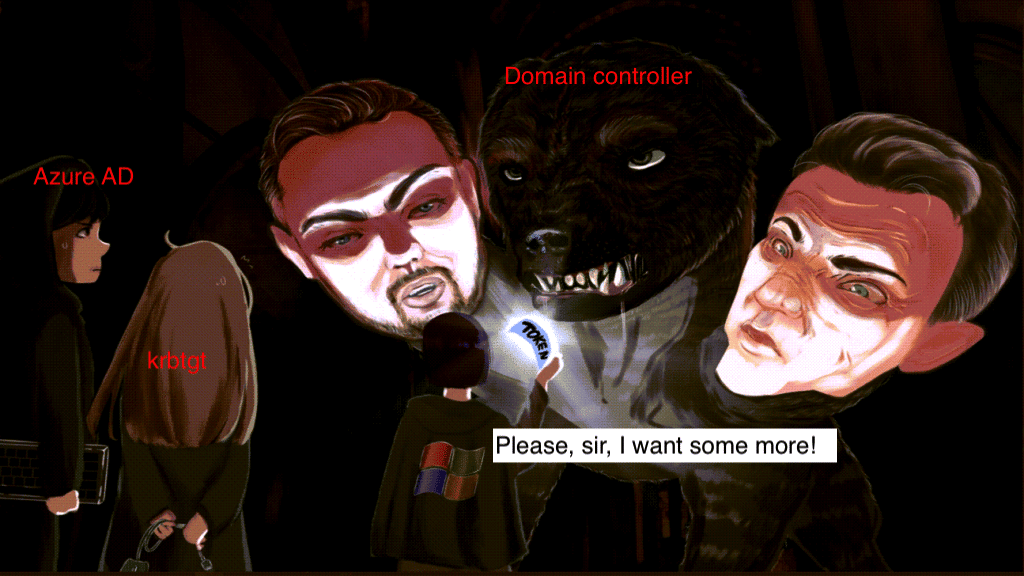
Meet Michael, Ben and Fluffy the dog. Cerberos is the mythical creature that guards hades, the gates of hell. Fluffy is the watchdog of the underworld etc. In previous roles he was guarding Windows Vista and was born in the 80’s when no one cared what shampoo you used.
Kerberos has 3 parts/heads (Michael = User, Fluffy = KDC, Ben = Service)
So what is Kerberos and how does it help us when we are looking to SSO to our domain resources? Here are some Kerberos basics
- “Kerberos” is just a cryptographic ticketing system
- In order to request tickets to domain resources, the Kerberos protocol needs to know where the “Ticket Master” is
- The “Ticket Master” is called the Key Distribution Centre (KDC)
- The KDC in a Windows Domain is a Domain Controller
Basically I need to get a ticket from the domain controller, or KDC, to prove who I am to the service e.g. file server
Finding a KDC
Azure AD joined devices are not aware of your domain, so how do they find the KDC to get tickets? Thats easy and takes us back to the 80’s again. DCLOCATOR is a process used by Windows systems to locate the closest available Domain Controller
First my client needs to find the KDC, how does it do this when the client knows nothing about the domain? Ah-ha, remember we have some synced attributes that come down with our Primary Refresh Token at logon. DCLocator needs a domain hint, which it gets from the <onpremisedomainname> attribute that came down with this PRT. A Domain Controller (KDC) is returned to the client as a result of, effectively, a DNS query.
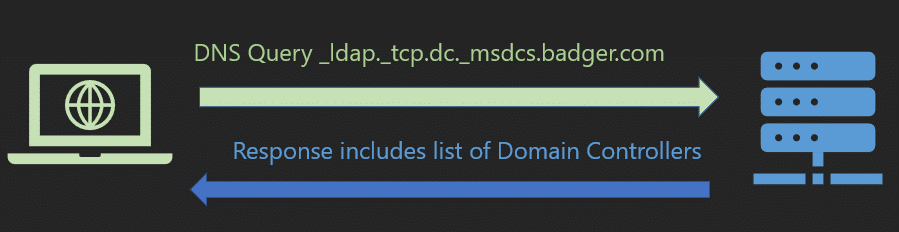
We can simulate what DCLocator does by running the nltest on a device and passing the domain name
nltest /dsgetdc:byteben.com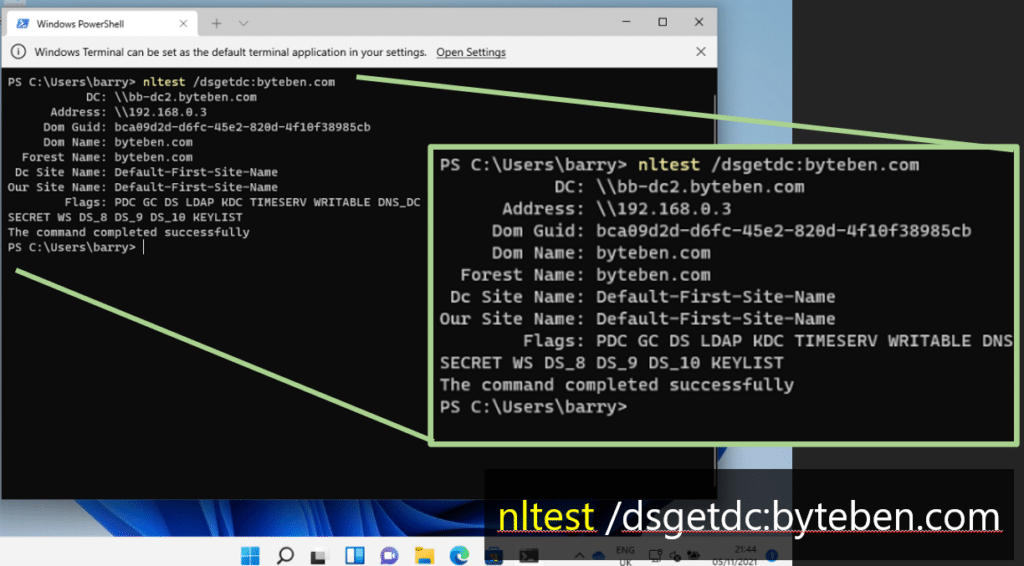
If on-premises DNS is broken or the client is not configured correctly for DNS. This query might/will fail. Its always DNS right?
Tickets Please
Now we know where the KDC is, lets go into a bit more detail on how Kerberos ticket issuance works and helps us to access domain resources.
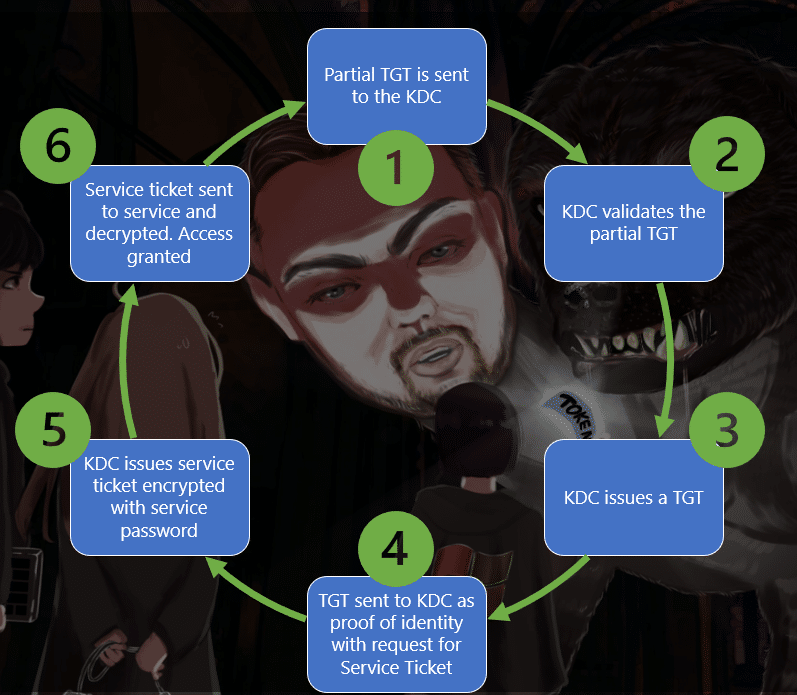
- The partial TGT we obtained from AzureAD is sent to the KDC.
- The KDC validates the partial TGT.
- The KDC then issues a “Golden” ticket to the user. The golden tickets, or Full TGT is proof the user authenticated. Authentication has a lot of overhead so we don’t want to keep doing it.
- The user then sends that TGT (proof that they can come into the nightclub) along with another request to access a service, like CIFS (fileshare)
- The KDC sees the user has a valid TGT (BTW, only the KDC can decrypt the TGT) and issues a “Service Ticket”. The service ticket contains things like group membership and service requested.
We can see the AS-REQ for a ticket come into the KDC (You can filter Wireshark using the KRB5 protocol to see this cool stuff)
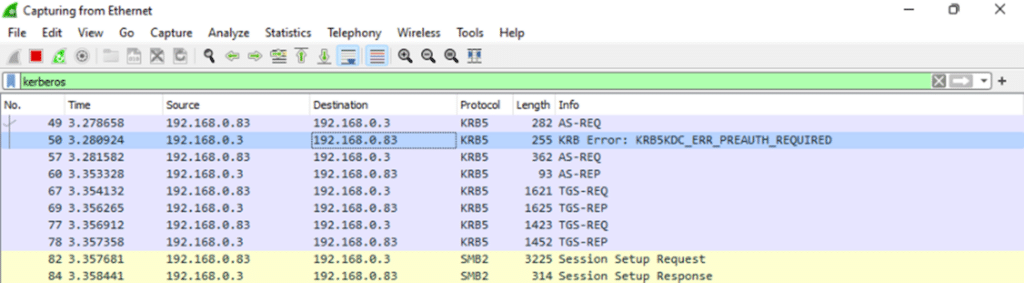
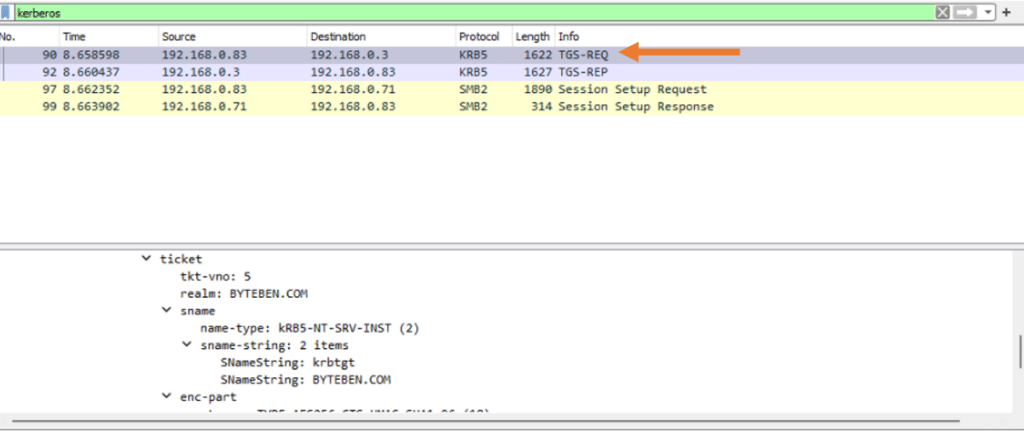
When we try to access a file share, we see the client send a request to the KDC.
When we try to access a file share, we see the client send a request to the KDC. The request contains our TGT which validates who we are
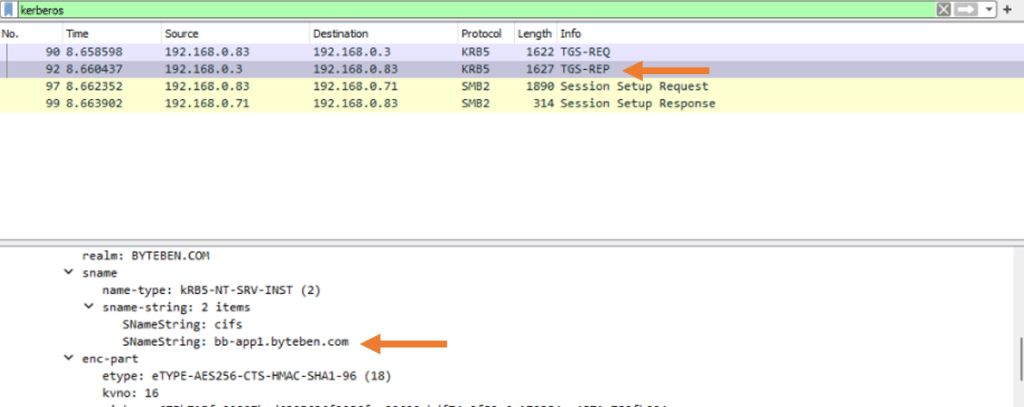
The KDC then issues us a service ticket for the resource we just tried to access. In this example we accessed a file share on bb-app1.byteben.com
Klist
Klist displays all the service tickets we have been granted. Here is the service ticket we requested to access the file share on bb-app1.byteben.com
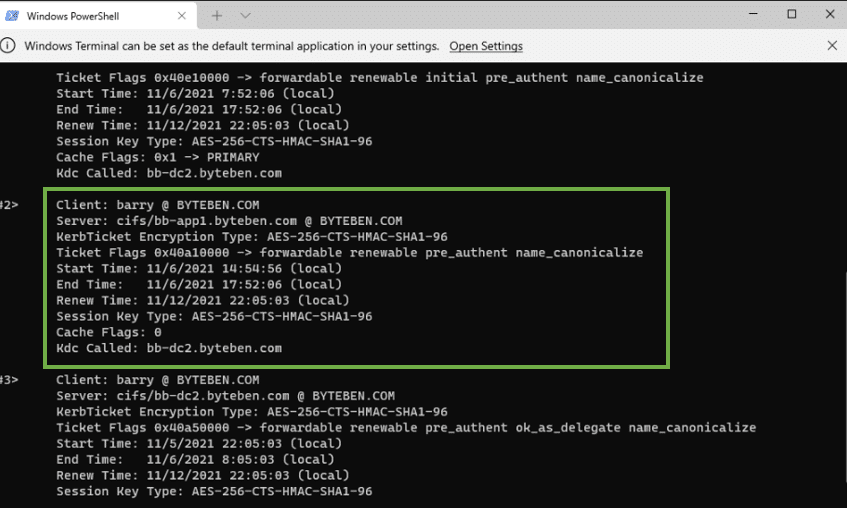
Klist also has another cool command when working with Cloud Kerberos Trust
klist /cloud_debug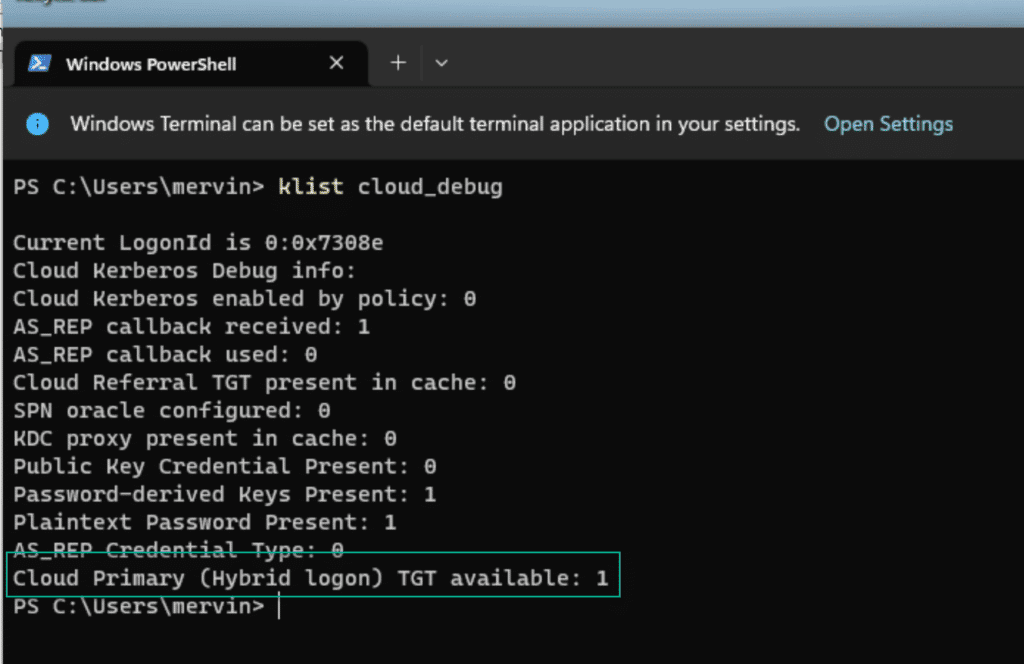
MFA
YES!
In case it was not obvious, the requirement to enroll into Windows Hello for Business is that the user can complete and MFA request from Azure AD. and there is absolutely no way around that. But there are tricks like using Temporary Access Pass in Azure AD, in case you want to pre-provision WHfB for end users, or you don’t want or need them to have MFA capabilities outside of their device.
Summary

Hopefully this 3 part mini series has been useful. Its always difficult to know how deep to go and keep the content engaging. If you would like any more info, please reach out!
Bookmark this page, because there is no way you will remember all of this stuff, and don’t forget that Ben and Michael work for likes and follows on Twitter and LinkedIn. Fluffy takes bones, peanut butter and cinema ticket stubs as donations.



 Simon Skotheimsvik




Hi guys,
An awesome article thanks so much.
We have Cloud Kerberos Trust set up but the AzureADKerberos RODC is showing as down/disabled.
Somehow, our Azure AD only joined devices are still able to get full TGT’s – but I’m not sure if they are reverting to key trust or somehow Cloud Kerberos Trust is still working?!
Got a change in place to get the AzureADKerberos RODC fixed via rotating the key or just deleting it and rerunning the powershell command, but just wondering if you could provide any info into how I can determine what authentication method is being used?
The devices are getting the partial TGT it seems based on the klist /cloud_debug so it’s all a bit odd!!
You could have a mix of things going on, depending on what else you have in your environment. cloud Trust is only really in play for WHfB, if user are doing password based login, they can authenticated on cloud-native devices regardless.
I woudl delete the configuration and redo it during off-hours. its just a matter of using the powershell commands.
I’m using cloud kerberos trust for entra joined VDI machines that users idle when disconnected. It appears as they are idle the kerberos ticket expires and doesn’t automatically renew. Am I required to have a scheduled task to renew the ticket to stop them from having to log off and back into the VDI box?
If you find the solution, please share it here.
I suspect there has to be an interactive login to get that partial tgt exchange to a full tgt each time. but I dont have a VDI environment.
I am happy to help debug as a consultant. you can reach my workplace e-mail through [email protected] or the contact form at https://inciro.com
Whoa! I am simply blown away with this article. Simply, the best article I have read thus far (PERIOD). From knowing WHfB fairly to understanding it like a Pro now. This basically answered all my questions from the challengs of Certificate and Keytrust to how migration can be done to Cloud Kerberos and then the nitty gritty of how cloud kerberos is actually doing its magic.
Ben and Michael, you guys have set the standard really really high. If you will write blogs like these, I will be very upset. (haha).
Thanks again guys, you are amazing!
Really appreciate it! We spent way too much time on this technology 😀
Thanks a ton for taking the time to write this. Its awesome.
Great article, very helpful!
I have a question regarding the cached TGT behavior for Microsoft Entra hybrid join authentication using cloud Kerberos trust for Windows Hello for Business. Several articles mention that the first WHfB sign-in requires line of sight to a domain controller, but subsequent unlocks can be done without this line of sight, as the sign-in is cached.
For example, I tested this scenario by checking my krbtgt ticket using klist, and even after the ticket’s End Time, I was still able to log in/unlock using WHfB sign-in. This indicates it is not the default 10 hours.
I would like to know the actual timeout duration and where the TGT status can be seen.
The authentication flow diagram for this method in Phase E states that the DClocator service is used to locate the DC, sending a partial TGT from the Kerberos provider to the DC, and the DC responds back with a full TGT to lsass, where it’s cached and used for subsequent ticket requests.
Thank you for the excellent write-up. I have a question regarding Microsoft Entra hybrid join authentication using Cloud Kerberos Trust, specifically about the final phase. Once Kerberos returns the TGT to LSASS, it is cached and used for subsequent requests.
I’m trying to understand how long this cache lasts, allowing logon using WHfB without line-of-sight to a domain controller. I verified that my krbtgt expires in 12 hours. However, even after 12 hours, I was still able to authenticate using WHfB without line-of-sight to a domain controller. How is this possible?
Is it perhaps due to another ticket, or is it based on the renew time rather than the end time of the krbtgt? How can I check the cache lifetime to understand how long a client can be offline while still using their cached WHfB credentials?
Thanks in advance!
Hi Ben, great write up! Do you have any experience with the usage of Cloud Trust with an Always on VPN?
I mean I got it to work with your guide and all – using WHfB to access on-prem resources but not even one reboot later and it stopped working. I feel like Endpoint Manager and InTune are way too unrefined and there’s not a single place to look at to know for certain why certain things don’t work.
Hello everyone,
thank you for your article. I have a strange feedback from my configuration. Here is what I receive under WHfB Event Viewer.
Windows Hello for Business On-Premise authentication configurations:
Certificate enrollment method: None
Certificate required for On-Premise authentication: false
Use Cloud Trust for on-site authentication: true
Account has a TGT in the cloud: true
When I try to connect with my PIN code, I get the following error message; Credentials could no be verified and this log come up in the Event Viewer.
A user failed to sign into the device with the following information:
Username: SYSTEM
User SID: SYSTEM
Credential Type: Software Key
Deployment Type: Cloud Trust
Software Lockout Counter: 0
Authentication Error Status: 0xC00000BB
Authentication Error Substatus: 0x0
We are looking to migrate from Key to Cloud Kerberos for our Windows Hello and wanted to see if there is a way in AD or Entra to report on what users are set up and using Cloud Kerberos.
Best article I’ve read in a while
I’m still not clear on whether devices prior to 21h2 will fallback to/use only key trust or will not work at all, after migrating to cloud trust.
Do I have to configure the cloud trust gpo only for devices with 21h2 or newer?
Thanks you for these 3 articles it’s very helpful!
I have one question regarding the migration from the cert model to Cloud Kerberos Trust:
How can I monitor the migration? Is there any way to get the information from AzureAD or the device itself?
Howdy,
Followed your guide and everything checks out with green lights. However the error I’m getting on my laptop when using fingerprint reader is “Your credentials could not be verified”
Any thoughts on where to troubleshoot?
Great guides, been a great help. Come across one niggle but I think I know why. We are hybrid joined devices now using Cloud Kerberos Trust. All working great in the office and remote.
Today after not using laptop for more than 24 hours and WFH I found I could not login with WHfB, had the message credentials could not be verfied.
I then manually brought up my VPN so device could see a DC and I was then able to login with Face or PIN.
Is this factually correct, will users have to bring up the VPN each time if away from office for more than 24 hours ? Hope you can advise.
Many Thanks
Great series!
thank you for the effort (-:
This has been a great help, and I thank you!
I’m getting ready to roll this out and, in my testing, I’m getting the expected results in Event ID 358 (User account has Cloud TGT: Yes ), but when I run klist cloud_debug on the endpoint, I get “Usage: klist [[-c] [-f] [-e] [-a [-n]]] [-k [-t] [-K]] [name]”
Am I missing something?
Interresting read. I have a problem it seems with Azure joined machines. it seems when using normal password local ressourses are avaliable. but if you LOCK the pc and login with pin it says an error ocurred when accings the local share like the pin isn´t working. All Klist tickets is also wiped when logging in with the pin seems odd. i can safely say this is on 2 computers this is occuring but not the rest……any ideas what to check
What if NgcSet=No. What to do…?
Excellent write up! Thank you so much for this. We recently provisioned this within our hybrid environment and most things are working as expected: MMC, print services, SMB shares, and SQL Authentication. However, we’re still running into issue when accessing internally hosted websites leveraging Windows Authentication via IIS – the client machine still tries passing the AAD credentials, so the SSO experience doesn’t work for those. Are you aware of a workaround for that scenario?
Hi Josh,
The internal website must use Kerberos for this to work – what I have seen is that NTLM is still used on many ols internal sites – some are able to get switched to Kerberos, but I can’t get into any specifics for webapps I dont know.
Hi there! Thank you for the Article Series, very technical!
We’re trying to implement Cloud Kerberos Trust for RDS with Remote Credential Guard, but unfortunately it doesn’t seem to work. The error “The requested session access is denied” is displayed after successfully logging in with mstsc /remoteguard. Without the Switch and Use of a Password it works instantly.
If you try to connect to a non RDS RDP Session, it works instantly.
Is this something possibly related to the RDS Role, or to Cloud Kerberos Trust?
Sorry mate – it should work but there are many parts of the machinery where this can go wrong – so much so that I don’t feel it would be feasible to comment on this particular error. if you find the solution, please share the cause and resolution here for others in the community to enjoy 🙂
I didn’t think that you could setup SSO to on prem rds with cloud trust? It was my understanding that you have to have a certificate server setup. Right now users have to select other options, and then manually type their full UPN and password to connect to on prem resources. Is there an easier way to do this?